
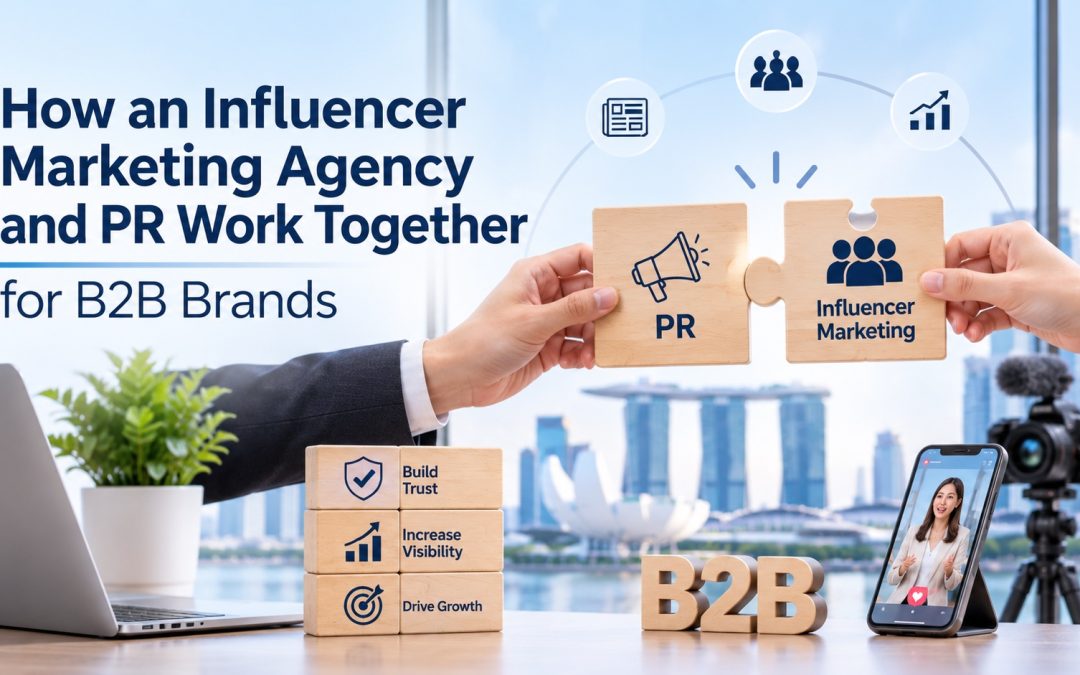
An influencer marketing agency and PR work together by sharing one message, one calendar, and one set of goals, so press coverage and trusted industry voices support each other instead of competing for attention.
A B2B PR agency in Singapore usually handles the media side, while the influencer team finds credible people who can speak to your buyers directly. This matters because 2026 research from MarketingProfs shows that about 46% of marketers call their B2B influencer program very effective. So the real question is how to make both pieces fit together, and we will walk through that step by step.
If you have ever wondered who does what, and why the two often get planned separately, this guide explains it in plain terms. We will cover what each side does, how they connect, and how you can measure the results, so you finish with a clear picture.
Key Takeaways
- PR earns credibility through media coverage, while influencer marketing puts trusted voices in front of the exact buyers you want to reach.
- Both sides work best when they share one core message, one calendar, and one way of tracking results from the very start.
- B2B influencers are often industry writers, speakers, or practitioners, so audience fit matters far more than a big follower count.
- Paid or gifted posts should be labeled clearly, because that protects your brand and keeps your campaign honest with readers.
- A single team, or two teams that talk often, usually gives more consistent results than two efforts running side by side.
What Does PR Do for a B2B Brand?
PR is about earning attention instead of buying it, and that is why B2B buyers often give it more weight than a paid ad. In clear words, a PR team tells your story to journalists and editors, and it frames that story so they actually want to cover it.
How Does Media Relations Build Trust?
Media relations sits at the center of PR work, and it starts with a strong story that is backed by real numbers. The team gathers your data, researches the statistics, and writes a press release that gives reporters something solid to work with.
Then the release gets seeded to the right outlets, and individual media pitching follows, because a release on its own often isn’t enough to spark a reporter’s interest. After that, follow-ups and steady relationship building keep your brand on the radar of the people who write about your industry.
What Else Does a Public Relations Team Handle?
A good public relations agency also looks after corporate communications and the daily monitoring of articles that mention your brand, so you always know where your story appears. It prepares for crisis situations too, which means you already have a plan if something goes wrong. Typical PR work includes:
- Press release writing and seeding to the media outlets that matter for your industry
- Media pitching and follow-up conversations with the reporters who cover your sector
- Interviews and reviews management, so every media request gets a proper response
- Daily media monitoring, followed by a report that shows what was published
- Crisis management planning, so your team knows what to say before it is needed
Sector knowledge matters here as well, since fintech, medical, MICE, and retail and F&B brands each deal with different journalists and different news cycles.
What Does an Influencer Marketing Agency Do for B2B Brands?
In B2B, an influencer is usually someone your buyers already listen to, such as an industry writer, a conference speaker, or a respected practitioner. These people aren’t chosen for their follower count alone, but because the people who follow them are the same people you want to reach.
How Does Influencer Selection Work?
The agency sources relevant influencers and brings them together in one list, so you can pick the ones that fit your brand best. That shortlist step matters a lot, because a good match with your audience will almost always beat a large follower number.
How Do Outreach and Engagement Work?
Once you choose someone, the agency reaches out and works with the influencer to agree on the best possible deal. It also hands over the content they need, such as key facts and product details, so that whatever they say about you stays accurate.
What Does Influencer Management Involve?
Management continues well after the post goes live, which is something many brands overlook. The agency manages the influencer for up to three months, handles inquiries that arrive through one social media platform, and drafts replies for your approval before anything is sent. You stay in control of what gets said on your behalf.
How Do Influencer Marketing and PR Work Together in One B2B Plan?
They work together when both sides start from the same story and aim at the same audience, even though they reach people through different doors. PR reaches readers through the press, while influencers reach followers through their own channels.
They Share One Message
If your press release says one thing and the influencer’s post says something slightly different, buyers will notice that quickly. So the PR team writes the core story, and the influencer team builds the content brief from it, which keeps every voice consistent whether it appears in a news article or a social post.
They Share One Calendar
Timing is a big part of this, if you think about it. When a news article and an influencer post land in the same week, each one makes the other look more credible. A B2B PR agency in Singapore that also manages influencers can plan those dates together, which saves a lot of back and forth.
They Feed Each Other’s Content
Press coverage gives influencers something credible to share, and influencer posts show journalists that real people care about your story. In clear words, each side creates material that the other side can actually use.
What Does That Look Like in Practice?
Say a fintech company is about to release a new market report, and this is only an example. The PR team writes the release around the key numbers, pitches it to financial reporters, and follows up with the ones who show interest. At the same time, the influencer team gives a respected industry voice the same facts, so their post matches the headline that readers see in the news.
The table below shows how the work usually splits, based on the services described on the Confluence PR website.
| Area | PR Team Handles | Influencer Team Handles |
|---|---|---|
| Story and message | Press release writing and press launch strategy | Content brief shared with the influencer |
| Audience | Journalists, editors, and media outlets | Industry voices and the people who follow them |
| Outreach | Individual media pitching and follow-up | Influencer outreach and engagement |
| Relationships | Ongoing media relationship building | Influencer management over the engagement period |
| Monitoring | Daily media monitoring and press release report | Enquiries and replies on the social platform |
| Risk | Crisis management planning | Replies approved by the brand before sending |
Want to see how press coverage and influencer voices could fit into one plan for your brand? Reach out to our team, and we will walk you through the options.
How Does a Joint Campaign Usually Run From Start to Finish?
A joint campaign tends to follow a simple order, so nothing gets rushed and nothing gets missed. The steps below are built from the PR and influencer services described above, and your own plan may adjust them a little.
Step 1: Gather the Data and Set the Goal
The team collects your information and the numbers behind your story, and then everyone agrees on what success should look like. Without that agreement, it is hard to tell later whether the campaign actually worked.
Step 2: Write the Story and the Brief
The PR side writes the press release and plans the press launch, while the influencer side prepares the content brief for the chosen voice. A B2B PR agency in Singapore that keeps both under one roof can make sure they come from the same story, so they match word for word where it counts.
Step 3: Launch Across Press and Influencers
During launch week, the release goes out, media pitching begins, and the influencer content goes live. Press engagement and influencer engagement then happen side by side, so each one supports the other.
Why Does Timing Matter?
When people see your brand in an article and in a trusted expert’s feed within days of each other, the message tends to stick better. Spacing the two months apart loses most of that effect.
What if the Press Responds Slowly?
That is pretty normal, so there is no need to worry. Follow-ups, fresh angles, and interview offers usually move a story along, and in the meantime the influencer posts keep the topic visible.
Step 4: Follow Up and Keep Talking
Journalists often come back with extra questions, so quick follow-ups matter more than most brands expect. On the influencer side, thoughtful replies to comments and inquiries keep the conversation alive well after launch day.
Step 5: Review the Results
Daily media monitoring and a press release report show where your coverage appeared. Influencer data shows how people engaged, so together they give you the full picture.
How Do You Measure Results When PR and Influencers Work Together?
Measuring a joint effort works best when you pick a few clear numbers before launch, so both teams know exactly what they are aiming for.
- Media coverage: which outlets picked up the story, tracked through daily media monitoring and the press release report.
- Influencer engagement: the comments, shares, and inquiries that came in on the platform where the influencer posted.
- Inquiry quality: whether the questions that arrive actually match the kind of buyers you want to reach.
- Message consistency: whether the press coverage and the influencer content told the same story from beginning to end.
Review these together, because a strong article may explain why an influencer post performed well, and the reverse can be true as well. That is also why many brands ask a B2B PR agency in Singapore to report on both sides in one place.
What Mistakes Should B2B Brands Avoid?
Most problems come from treating the two sides as separate projects, and these are the ones that show up most often:
- Running PR and influencer work with different messages, which confuses the buyers who see both.
- Choosing influencers by follower count instead of audience fit, even though fit matters far more in B2B.
- Launching influencer content before the press story is ready, or the other way around.
- Skipping clear labels on paid partnerships, which weakens trust with readers.
- Waiting for a crisis before building media relationships, when those relationships take time to grow.
Why Does Labeling Paid Posts Matter?
In Singapore, advertising is mostly self-regulated, and the Advertising Standards Authority of Singapore (ASAS) administers the Singapore Code of Advertising Practice to promote honest advertising. The code isn’t law, but ASAS can ask advertisers to amend or withdraw ads that go against it. The Competition and Consumer Commission of Singapore also explains how fair trading rules protect consumers from unfair trade practices, which is useful background if your brand also sells to consumers. So when PR and influencers share one plan, it is easier to keep the labels and claims consistent.
Why Choose a B2B PR Agency in Singapore That Connects PR and Influencers?
Confluence PR was set up under the Presence Marketing Group to meet the growing demand for specialized communications and marketing work for B2B clients and the MICE industry. The team offers public and media relations, social media marketing, and influencer marketing, so the pieces in this guide can sit under one plan. Its PR directors cover sectors such as fintech, medical, MICE, and retail and F&B, and country managers across Asia support brands that want regional reach.
If you are looking for a B2B PR agency in Singapore that can connect press coverage with influencer voices, that mix of services is worth a close look. To talk about your next campaign, contact Confluence PR and share what you want to achieve. The team will help you work out where PR and influencer marketing fit together for your brand.
Frequently Asked Questions
What is the difference between influencer marketing and PR for B2B brands?
PR earns attention through third parties, mainly journalists and editors, who decide on their own whether your story is worth covering. Influencer marketing works through individual industry voices who share your message with their own followers. PR also covers reputation work, such as corporate communications and crisis planning, while influencer marketing focuses on specific audiences and content. In B2B, the two overlap quite a bit, since many influencers are respected experts, and that overlap is exactly why planning them together makes sense.
Can influencer marketing replace PR for a B2B brand?
Not really, because they solve different problems: an influencer post reaches that person’s followers, but it doesn’t build press credibility, monitor coverage, or prepare you for a crisis. PR handles those things through media relationships, daily monitoring, and planned communications. A strong influencer program still benefits from a public relations agency or an in-house team to protect your reputation and give your story a news angle. Think of influencers as one channel, and PR as the wider structure around it.
How do I choose the right influencer for a B2B brand?
Start with audience fit, since the best influencer is the one whose followers match your buyers. Look at what they have posted before, and check that their tone suits your brand. Then see whether they can work from a content brief without changing the facts. Agencies usually source and consolidate a list of relevant influencers, so you can choose from a shortlist instead of searching alone. After that, a conversation about expectations helps both sides agree on a fair deal.
Do B2B influencers have to disclose paid partnerships in Singapore?
ASAS guidance expects marketing content to be recognizable as advertising, so paid or gifted posts should be labeled clearly. That protects readers, and it protects your brand’s reputation too. Buying fake likes or followers also goes against ASAS guidelines, so it is best to avoid it entirely. Because the code is self-regulatory, ASAS can ask for changes or withdrawals when content falls short, which is why checking the official code page before each campaign is a smart habit.
Is it better to hire one agency for both PR and influencer marketing?
One agency often makes things easier, because the message, timing, and reporting stay in one place. A B2B PR agency in Singapore that also runs influencer work can plan the press launch and the influencer posts together, and that usually saves time. Two separate agencies can still work well, but they need regular meetings and a shared brief to avoid mixed messages. So the choice depends on how much coordination your own team can handle, and if you prefer fewer moving parts, one team is usually simpler.